

Erasmus+ Project Studies on Language Acquisition Support for Individuals with Autism Published as a Project Book
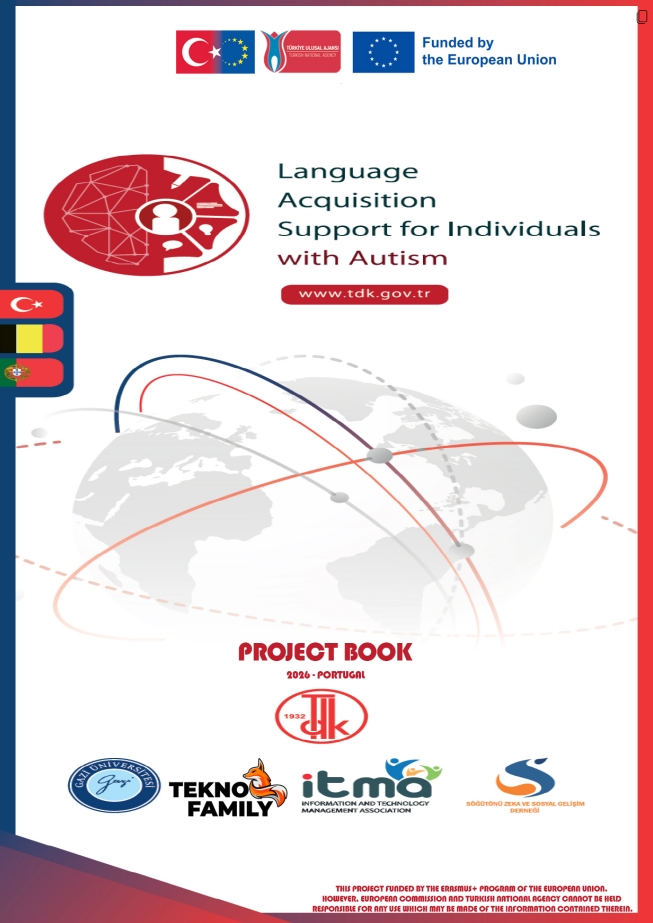
The project book presenting the research and field studies conducted in Portugal within the scope of the European Union Erasmus+ project titled “Language Acquisition Support for Individuals with Autism” has been prepared.
Implemented through the cooperation of institutions from Türkiye and Europe, the project aims to examine innovative approaches that support the language acquisition, communication skills, and educational development of individuals with autism. The project book provides a comprehensive overview of academic research, educational practices, healthcare services, digital tools, and public policies related to autism in Portugal.
As part of the study, research conducted in Portugal was reviewed under several key themes, including early diagnosis, specialized educational support, social inclusion, and access to healthcare services. The report particularly emphasizes the importance of specialized autism units in schools for the early identification of students and their referral to appropriate educational support.
The project book also includes four case studies. These focus on the prevalence of autism in Portugal’s Centro Region, the University of Coimbra’s contribution to the European Autism Genomics Registry, the certification of CDIJA in the Azores as Portugal’s first Certified Autism Center™, and the DiGiTool project, which supports teachers in using digital communication tools with autistic students. Together, these case studies provide important examples in the fields of education, healthcare, genetic research, professional development, and technology-enhanced learning.
Another section of the project presents the findings of a survey conducted with 53 participants on language support for autistic children. The results showed that 62.26 percent of respondents use digital tools in educational and communication processes. Wordwall, ARASAAC, Kahoot, Quizizz, interactive whiteboards, and visual schedules were among the most frequently used tools. In addition, 71.70 percent of respondents stated that gamification elements increase the motivation and participation of autistic children.
The findings demonstrate that digital tools have considerable potential to support the language and communication skills of autistic children. However, the effectiveness of these practices is limited by challenges such as insufficient materials, gaps in specialist training, limited time, and weak coordination between institutions. The need to strengthen collaboration among teachers, therapists, professionals, and families was therefore highlighted.
The outcomes of the project are expected to contribute to the development of accessible and evidence-based educational materials, the improvement of professional competencies among educators, and the more active involvement of families in language development processes.
The project book serves as a valuable resource for educators, researchers, specialists, families, and decision-makers working in the field of autism.
Download Book
Language Acquisition Support for Individuals with Autism Project
2024-1-TR01-KA220-YOU-000254554
This project is supported by the European Commission. The views expressed herein reflect the views of the authors and partners and the European Commission and the Turkish National Agency cannot be held responsible for their opinions.
Contact
Türk Dil Kurumu
Remzi Oğuz Arık, Atatürk Blv No:217, 06680
Çankaya/Ankara
tdkerasmus06@gmail.com
Language Acquisition Support for Individuals with Autism Project 2025. © All rights reserved.
 English
  French
  Portuguese
  Turkish